MOUTAIN BIKING MOROCCOClimb Toubkal peak
and cycle to Sahara Desert


Difficulty
Medium
Min Age
14 +
Duration
12 Days
Twelve days, two ways to move, and a finish line that’s actually a desert. This toubkal bike tour starts on foot, climbing to the summit of North Africa’s highest peak, then swaps boots for wheels for the rest of the journey: kasbahs, canyon country, a UNESCO village that’s appeared in countless films, and finally, camel tracks into the dunes where the Sahara truly begins.
By the time you cycle, Sahara-bound, through the Draa Valley and past Zagora, you’ll have crossed nearly the entire width of Morocco under your own power, before the final stretch into the dunes by camel and 4×4. Nights shift from mountain refuges to converted kasbah hotels to nomad tents lit by campfire, and the landscape changes just as often: High Atlas peaks, volcanic plateaus, palm-lined river valleys, and finally, dunes stretching toward a horizon with nothing else in it.
Starting Point / Ending Point: Marrakech
Departure Time: 9 AM
Includes & Excludes
✔️ Arrival & Departure Transfer
✔️ Transport pick us from Marrakech and get us back to Marrakech
✔️ Transport support Vehicle 44 follow us all the trip.
✔️ Assistance Transport Minivan to pick us some times from place to place ( for big group )
✔️ Accommodations
✔️ All Meals during this Trip & Mineral Water
✔️ Full suspensions Mountain Bike with Helmet
✔️ English and French speaking local guide
❌ Travel Inssurance
❌ Soft Drinks
Essential Equipment
We recommend packing the following items:
– Normal daily clothes
– Padded cycling shorts and gloves
– Breathable top or cycling jersey
– Sunglasses/eye protection
– Stiff-soled shoes suitable for cycling
– Waterproofs and long cycling trousers
– For the earlier departures you may need some warmer layers
– Sun cream
PER PERSON
880 €
Tour
Itinerary
Departure
Day 1
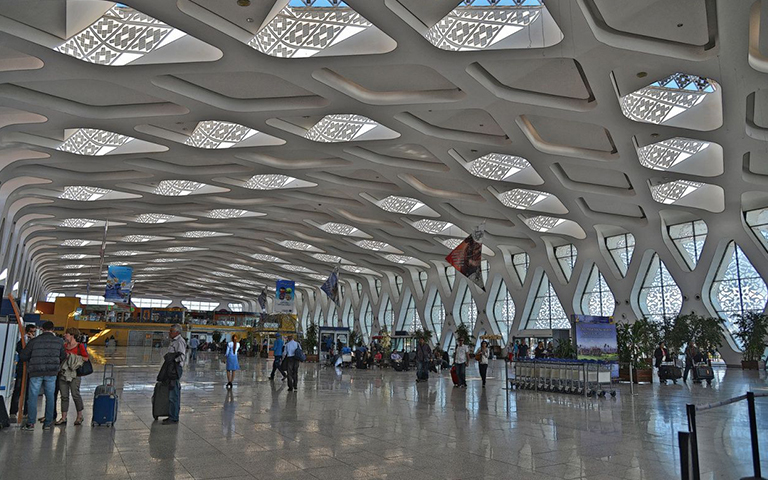
Airport – Marrakech
We warmly welcome you to our beautiful country on your arrival and then transfer you to your evening accommodation in Marrakech. No activities are planned on the arrival day, so we simply have dinner together and talk about the days of our trip.
Accommodation: hotel
Day 2
Marrakech – Imlil – Azib n’Tamsoult
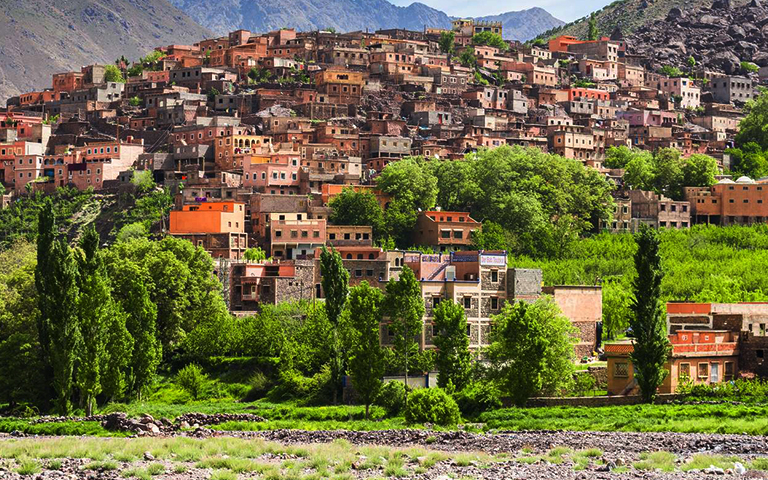
After your transfer from Marrakech to Imlil, a village in the High Atlas Mountains, you get ready for the trek. Imlil is a good starting point for a trekking holiday or for climbing Jebel Toubkal, the highest mountain in North Africa (4,167 m). It has a variety of shops and pensions and is a trailhead village for treks deeper into the mountains, including the ascent of Toubkal. Imlil is a progressive community, and money from tourism goes into a variety of projects organised by the village, such as litter collection and disposal. You then set off on a 6-hour trek out of the Imlil Valley and into the Azzaden Valley. Along the way, you pass Tizi n’Mzik at 2,450 m, the refuge at Azib n’Tamsoult and the Ighouliden waterfalls. Overnight in the Tamsoult mountain refuge at 2,600 m.
Walking time: approx. 6 hours
Accommodation: Tamsoult Refuge
Day 3
Azib n’Tamsoult – Aguelzim (3,560 m) – Toubkal Base Camp
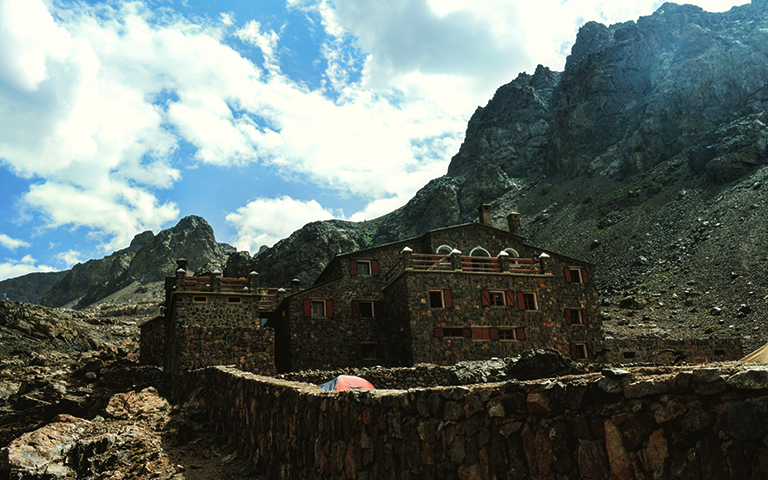
Today’s trek features a challenging ascent out of the Azzaden Valley, culminating at the Aguelzim Mountain Pass, situated at an altitude of 3,560 m. Along the way, you are rewarded with breathtaking vistas of the Atlas Mountain range. Lunch is enjoyed amidst this stunning backdrop, offering a well-earned moment of rest and reflection.
The day concludes at the Toubkal Refuge (Neltner Hut), where you settle in for the night. Accommodation is in a shared bunk room, likely with fellow trekkers preparing for an early start to summit Jebel Toubkal the next morning.
Walking time: approx. 7 hours
Accommodation: Toubkal Refuge (Neltner Hut)
Day 4
Toubkal Ascent – Imlil – Marrakech
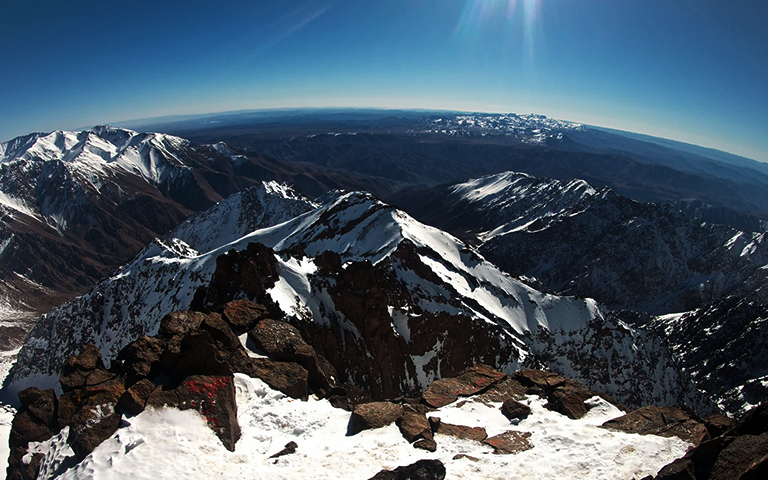
Up early for the climb up Toubkal (4,167 m), from where, clouds allowing, we have wonderful views over the Atlas range and the Sahara Desert. Then it is a long way back down, past the refuge and along the well-worn path back to Imlil. This is a fairly long day with 8–9 hours of trekking, involving 900 m up and then almost 2,500 m back down to Imlil, before we transfer you to Marrakech for the night. Tomorrow, the Toubkal bike tour truly begins.
Accommodation: hotel or riad
Walking time: approx. 8–9 hours
Day 5
Marrakech – Telouet (Mountain Biking)
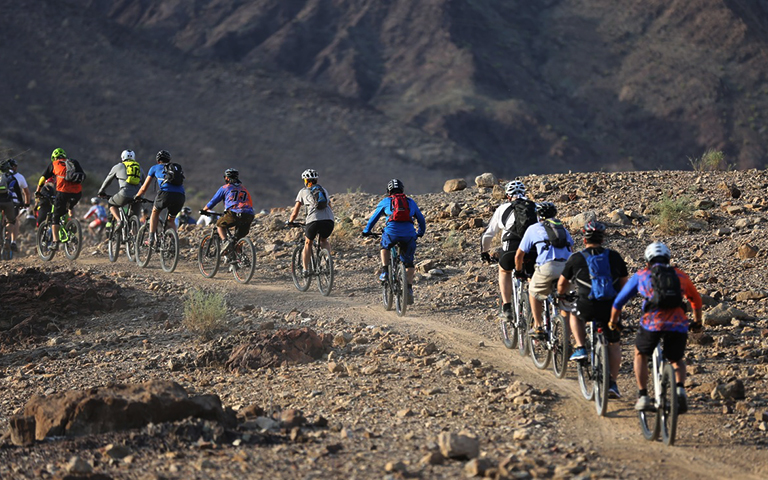
After breakfast, we set off in Land Cruisers for a scenic drive to the kasbah of Telouet. The crumbling fortress is set in a remote valley overlooking mud villages and fertile gardens. We climb on switchbacks up the Tichka Pass, one of North Africa’s highest paved roads. Over the pass, we have a few more kilometres to drive before reaching the ruined kasbah. We break for a picnic in the gardens, then hop on our bikes to begin our cycling. The ride begins at 1,800 m / 6,000 ft, so the first section might feel a bit tough. After about 10 km, we start off-roading down a 32 km jeep track to Tamdaght, set in a desert palm oasis near Ait Benhaddou. The surface is occasionally very poor and sometimes rocky, but there are some fun, fast sections too as we descend through numerous mud villages and canyon scenery to an altitude of 1,200 m / 4,000 ft. We aim to arrive well before sundown for some great photo opportunities from the terrace of our converted kasbah hotel. Overnight in a converted kasbah. Mountain biking: 42 km / 26 mi. Ascent: 207 m / 679 ft. Descent: 665 m / 2,181 ft.
Day 6
Ait Benhaddou (Mountain Biking)
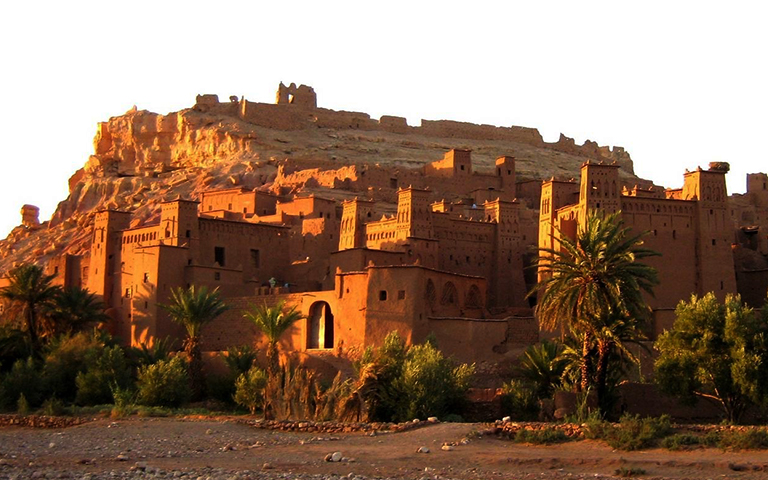
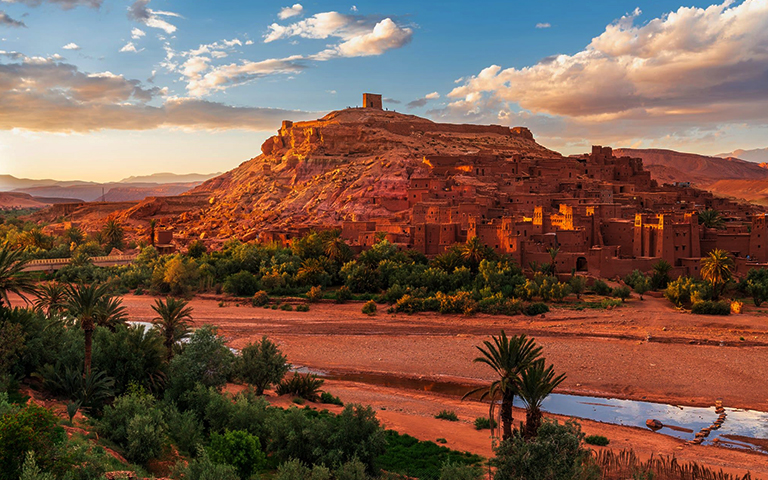
This morning, we pack our gear onto the Land Cruisers and then have a post-breakfast tour of the ksour of Ait Benhaddou. This complex of adobe kasbahs is a UNESCO World Heritage Site and is still inhabited by a handful of families. It is surrounded by date palms and rugged mountains and is probably the best-preserved village in the south of Morocco. It made an appearance in the film Gladiator. Afterwards, we set off in our support vehicles to the start of our three-day ride through the remote Jebel Sirwa region. With no hotels and few village lodgings available, we spend the first night under canvas and the second night in a basic village house. In Agouim, we mount our bikes and pedal along a well-maintained dirt path westbound into the heart of the Sirwa. The path we tackle is hilly, with one significant climb up to our wilderness campsite. En route, we pass through some very remote villages and start to get a flavour for the area, although be prepared for constant changes in character and landscape throughout the three days we spend here! After a lunch break, we climb onto an expansive plateau and set up our campsite. With luck, we have clear skies and panoramic views of the craggy mountain peaks of the High Atlas and the dark tabletop peaks of the Sirwa range. We are now at about 2,100 m above sea level, so temperatures can drop below freezing. Wrap up warm for a cold night of wilderness camping. Overnight in tents. Mountain biking: 40 km / 24 mi. Ascent: 1,202 m / 3,944 ft. Descent: 586 m / 1,922 ft.
Day 7
Ouarzazate (Mountain Biking)
Those who still feel energetic can make an early start from the village up a gradual 24 km climb. The scenery is wild and volcanic, with some rocky passages as well as some smoother undulating tracks. Those craving a rest can take a transfer in our support vehicle up to the top of the pass, the top of one of Morocco’s best descents down towards the plains of Ouarzazate. From the top of the pass, there is about 35 km of jeep track to our finishing point: that is over 30 km of descent and just one glute-burning 3 km climb after lunch around the village of Tamachocht, an authentic village perched above a fertile valley of cultivated terraces. After our picnic lunch, a quick climb and some more downhill, we transfer out of the Sirwa back to civilisation and the town of Ouarzazate. It is an hour’s drive across strikingly desolate landscapes to our comfortable hotel overlooking the town’s palm groves. Here you can enjoy a hammam, a typical Moroccan steam bath, and a massage (women only) to relax any tired muscles. Overnight in a converted kasbah hotel. Mountain biking: 60 km / 36 mi (+24 km / 15 mi optional ascent). Ascent: 736 m / 2,415 ft. Descent: 1,469 m / 4,820 ft.
Day 8
Zagora – Agdz (Mountain Biking)
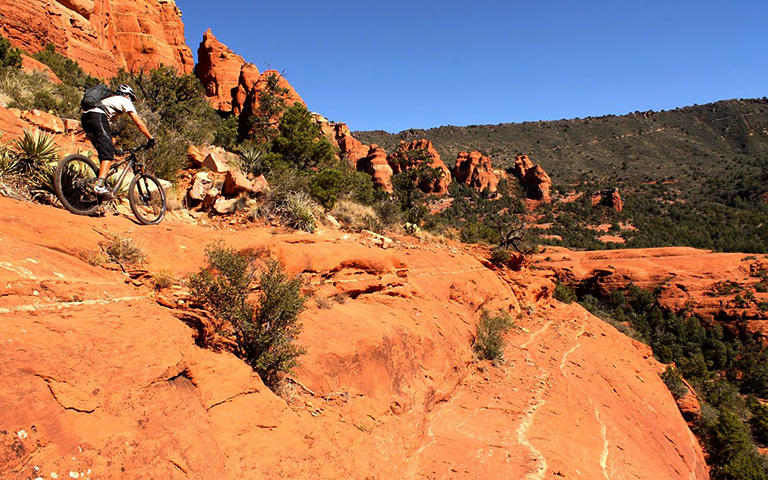
After a leisurely start to the day, we have a short transfer to Zagora, the start of today’s ride. There is an easy start with a thrilling 8 km descent on a dirt path that joins the valley of the River Draa, Morocco’s longest river. Today’s ride is nice and varied and not too taxing, with several short climbs and descents as we follow the upper reaches of the river valley. Some of the villages along the way are startling, with abandoned kasbahs. Our overnight stop is around the town of Agdz where, depending on the size of the group, we stay either in a beautifully renovated kasbah just south of Agdz or in a French-run auberge in the palmery. Mountain biking: 40 km / 24 mi. Ascent: 352 m / 1,155 ft. Descent: 609 m / 1,998 ft.
Day 9
Zagora (Mountain Biking)
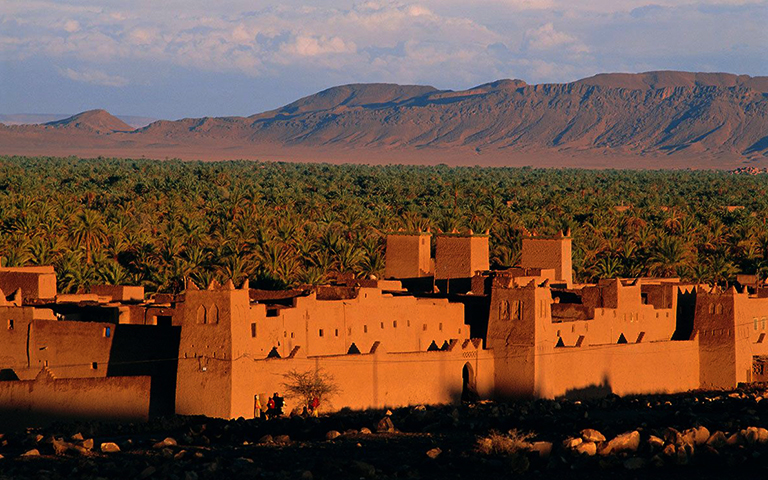
Riding out from our hotel, we continue to explore the Draa Valley as we descend towards the fringes of the Sahara Desert. The Draa Valley is one giant oasis of date palms, fruit trees and vegetables. En route, we explore the passageways and ruined interiors of the extensive Kasbah Tamnougalt, which overlooks the mountain of Jebel Kissane, a backdrop that stays in our view for some time. How far we ride today depends on the group. It is a day of rolling riding through typical villages, with a picnic in the palm groves en route to Zagora, our destination. The full route is long, so the last part of the journey is in 4x4s. Zagora is a regional administrative centre that only dates back to French colonial times. From here, you cycle Sahara-bound for one more day before the dunes take over. Overnight at auberge. Distance variable depending on group preferences.
Day 10
Sahara Desert (Hiking and Possibility of Camel Riding)
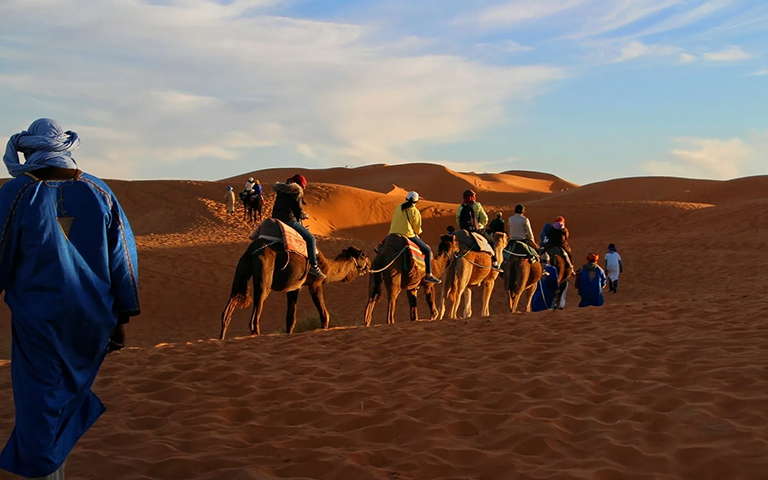
Today is our desert day (and night). After passing through an ever-changing landscape from the High Atlas to the desert, today we get our first glimpses of dunes. We have around 70 km of paved road and 60 km of track to cover as we head south-west. It is a harsh environment for biking, so we transfer by vehicle as we make our way via Tagounite to Chegaga. It is a landscape of dunes and dry lakes, lost oases and lonely acacia trees, an area frequented by Saharan nomads with their caravans of camels. This is the deep south of Morocco and marks the start of the Sahara Desert, which stretches for a further 1,800 km or so southwards. En route, we may get the chance to ride camels. There is no more powerful symbol of the desert than this extraordinarily adapted animal. In the afternoon, we arrive at the trip’s most southerly point, our desert camp surrounded by dunes and little else. Here our hosts set up camp for us, and we spend the night in nomad tents under the desert sky, enjoying a barbecue meal and a campfire. All day there are opportunities to walk. Overnight in typical nomad tents
Day 11
Sahara Desert – Marrakech
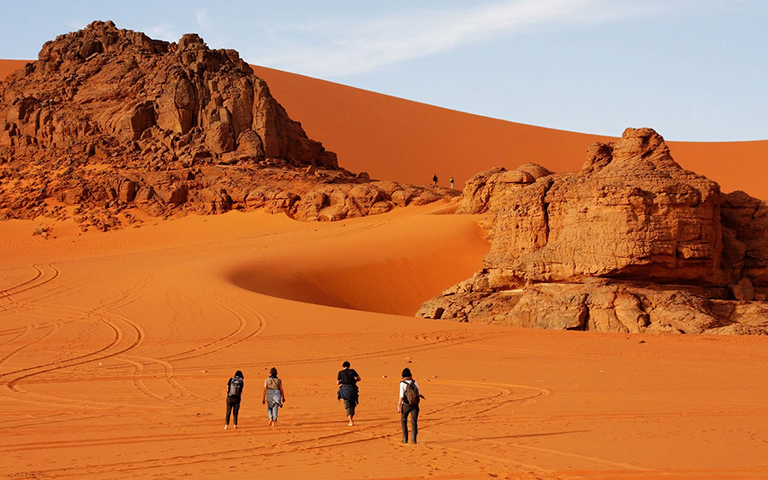
Today we have a serious transfer back to Marrakech, as we have travelled a vast distance across Morocco. The drive takes about seven hours, but Marrakech is a real highlight. Once we are settled into our hotel, there is time to wander through the labyrinth of narrow alleys in the ancient Medina, a UNESCO World Heritage Site. You might like to visit the Badi and Bahia Palaces, the famous souks (markets), the Marrakech Museum or the Majorelle Botanical Garden, owned by Yves Saint Laurent. Tonight, we explore the main square, Jemaa el-Fna. At night, the square is transformed into a giant open-air restaurant, with men in white coats serving anything from sheep’s head stew to snails in hot sauce. The rest of the square is dedicated to other forms of entertainment, such as snake charmers, storytellers, acrobats and dancers. Later on, we head out for a farewell dinner and get a chance to experience what Marrakech offers in the way of nightlife. Overnight in a comfortable hotel.
Day 12
End of the Trip – Transfer to the Airport
This cycling and hiking adventure through Morocco comes to an end today. There are no activities planned, and you are free to leave at any time; the trip ends after breakfast. Those on group flights will be taken to the airport in time for their flight home. If you have time before your flight, explore Marrakech. The best places to get a view over the square are the Grand Balcon du Café Glacier and Café de France. You have to buy a drink, but at MAD 20 it’s worth it for a great view.
TREKKING
BIKING
LOCATION & HOURS
Douar Aroumd, Imlil, Asni, Al Haouz, Marrakech
Biking in Morocco is a locally owned tour company offering authentic cycling and trekking adventures across Morocco. Led by experienced local guides Abderrahim and Lahcen Idmansour, we share our knowledge, culture, and passion for Morocco to create memorable experiences for travelers from around the world.